How to Set Up a PMO That Drives Real Outcomes (Not Just Reporting)

Table of Contents
1.Introduction: How to Set Up a PMO That Drives Real Outcomes
Project Management Offices (PMOs) have become a standard feature in organizations seeking greater control over projects, programs, and strategic initiatives. Yet despite their widespread adoption, many PMOs struggle to demonstrate tangible business value. Ask executives what they think of their PMO, and the responses often center around status reports, governance meetings, templates, and project tracking. While these functions are important, they rarely represent the true purpose of a modern PMO.
The reality is that many PMOs were established to improve visibility into project performance rather than drive strategic outcomes. Over time, they evolved into administrative functions focused on reporting deadlines, collecting updates, and enforcing project management standards. As a result, stakeholders often view the PMO as a compliance organization rather than a strategic partner. This perception can significantly limit its influence and impact across the enterprise.
Today's business environment demands something different. Organizations are navigating digital transformation, market disruption, economic uncertainty, evolving customer expectations, and increasing competitive pressures. Leaders need more than project status updates—they need a mechanism that helps translate strategy into execution, prioritize investments, optimize resources, manage change, and deliver measurable business outcomes.
This is where a modern PMO can create significant value. A high-performing PMO serves as the bridge between strategic objectives and operational execution. It ensures that projects and programs are aligned with organizational priorities, resources are allocated effectively, risks are managed proactively, and benefits are realized after project completion. Rather than focusing solely on what is being delivered, it concentrates on why initiatives matter and how they contribute to business success.
Building this type of PMO requires a deliberate approach. Organizations must move beyond traditional reporting functions and establish structures, processes, and capabilities that support decision-making and value realization. This includes defining a clear purpose, securing executive sponsorship, implementing governance frameworks, developing meaningful performance metrics, and fostering a culture focused on outcomes rather than activities.
The most successful PMOs are not measured by the number of reports they produce or meetings they facilitate. They are measured by their ability to improve strategic execution, accelerate business transformation, increase project success rates, and help organizations achieve their goals. They provide leadership with actionable insights, enable informed decisions, and create alignment across the enterprise.
Setting up a PMO that delivers these results requires more than adopting best practices or implementing new tools. It requires a fundamental shift in mindset—from managing projects to enabling business value. Organizations that make this shift position their PMOs as strategic assets capable of driving sustainable growth and competitive advantage.
In this article, we will explore how organizations can design and implement a PMO that goes beyond reporting to become a true driver of business outcomes. From defining its purpose and governance model to measuring success and avoiding common pitfalls, we will examine the key elements that separate high-performing PMOs from those that struggle to demonstrate value.
2.Understanding the Modern Role of a PMO
The role of the Project Management Office has evolved significantly over the past two decades. Traditionally, PMOs were established to bring consistency and control to project delivery. Their primary responsibilities included maintaining project schedules, enforcing methodologies, producing reports, and ensuring compliance with organizational standards. While these activities remain important, they are no longer sufficient in an environment where organizations are under constant pressure to execute strategy faster and deliver measurable business value.
A modern PMO must serve a broader purpose. Rather than functioning solely as a project oversight body, it should act as a strategic enabler that helps organizations bridge the gap between planning and execution. In today's business landscape, success depends not only on completing projects on time and within budget but also on ensuring those projects contribute meaningfully to organizational goals.
This shift requires PMOs to move from an activity-based mindset to an outcome-based mindset. Instead of focusing primarily on project status, milestones, and reporting metrics, modern PMOs focus on value realization. They help organizations answer critical questions such as: Are we investing in the right initiatives? Are our projects aligned with strategic priorities? Are we achieving the intended business benefits? Are we maximizing the use of our resources?
The answer to these questions often determines whether a PMO is viewed as a strategic asset or an administrative function. High-performing PMOs provide leadership with insights that support decision-making, prioritization, and resource allocation. They help organizations manage uncertainty, adapt to changing business conditions, and maintain alignment between strategic objectives and operational activities.
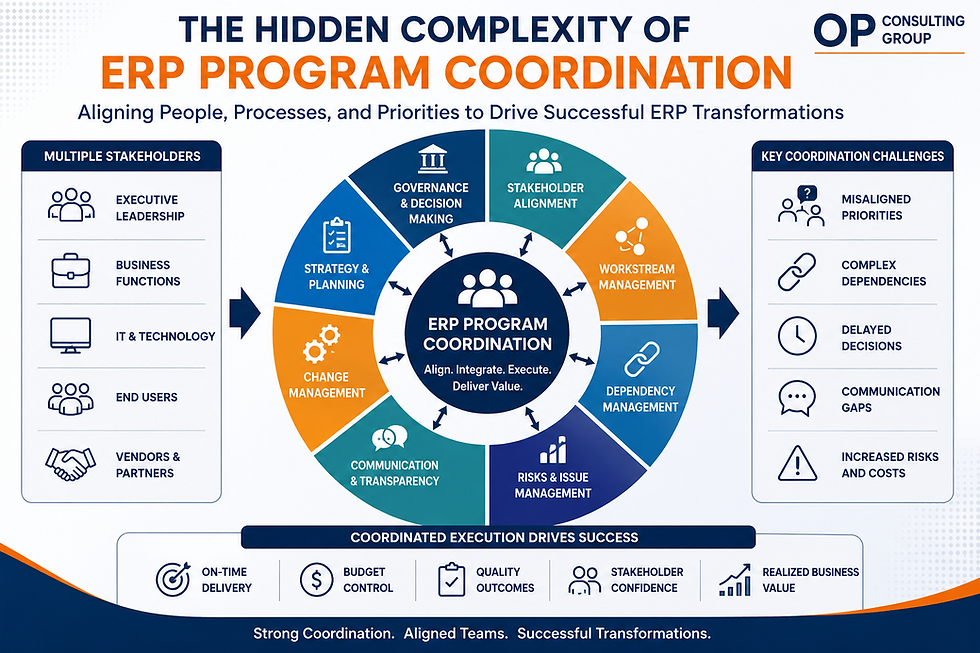
Another important evolution is the PMO's role in organizational transformation. As businesses invest in digital transformation, ERP modernization, cloud migration, process automation, and customer experience initiatives, PMOs increasingly become central coordination points for enterprise-wide change. Their ability to oversee multiple programs, manage interdependencies, and align stakeholders across departments makes them uniquely positioned to drive transformation efforts successfully.
Modern PMOs also play a critical role in portfolio management. Rather than managing projects individually, they help organizations evaluate and prioritize investments across the entire portfolio. This ensures resources are directed toward initiatives that deliver the highest strategic value. In many organizations, demand for projects exceeds available capacity. A strategic PMO helps leadership make informed choices about where to invest time, budget, and talent.
The most effective PMOs are also becoming champions of organizational agility. Traditional governance models often emphasize control and standardization, but today's business environment requires flexibility and rapid decision-making. Modern PMOs strike a balance between governance and agility by establishing frameworks that support accountability without creating unnecessary bureaucracy.
Technology has further expanded the role of the PMO. Advanced portfolio management tools, analytics platforms, dashboards, and AI-driven insights provide unprecedented visibility into project performance and business outcomes. However, technology alone does not create value. The PMO's responsibility is to transform data into actionable insights that help leaders make better decisions.
Ultimately, the modern PMO exists to help organizations achieve strategic objectives. It serves as a facilitator of execution, a steward of investment decisions, and a driver of organizational performance. Its success is measured not by the number of reports produced or meetings conducted but by its contribution to business results.
Organizations seeking to establish or transform their PMOs must begin by embracing this broader perspective. When the PMO is positioned as a strategic partner rather than a reporting function, it becomes a powerful force for driving growth, innovation, and long-term business success.
3.Defining the Purpose of Your PMO
Before establishing governance structures, selecting tools, or implementing methodologies, organizations must answer a fundamental question: Why does the PMO exist?
Many PMOs struggle because their purpose is unclear. Stakeholders have different expectations, leadership teams define success differently, and project teams often view the PMO as an obstacle rather than a source of value. Without a clearly defined purpose, the PMO risks becoming a collection of disconnected activities that consume resources without delivering meaningful outcomes.
The purpose of a PMO should be directly tied to business objectives. Rather than focusing on project administration, organizations should identify the specific problems the PMO is expected to solve and the value it is expected to create. This clarity serves as the foundation for every future decision regarding structure, processes, staffing, and performance measurement.
For some organizations, the PMO's primary purpose may be improving project delivery performance. In these cases, the PMO focuses on increasing consistency, reducing project failures, improving schedule predictability, and enhancing risk management practices. For others, the PMO may be responsible for strategic portfolio management, ensuring investments are aligned with organizational priorities and maximizing return on investment.
In transformation-focused organizations, the PMO often serves as the engine that drives enterprise change. It coordinates complex initiatives, manages cross-functional dependencies, and ensures strategic programs achieve their intended outcomes. In these environments, the PMO becomes a critical partner to executive leadership.
Defining purpose also helps establish boundaries. One of the most common challenges PMOs face is scope expansion. As organizations recognize the value of centralized coordination, they often assign additional responsibilities to the PMO without clearly evaluating capacity or alignment. Over time, the PMO can become overloaded with administrative tasks that distract from strategic priorities.
A clearly defined purpose provides a framework for evaluating new requests and determining whether they support the PMO's mission. It helps leaders make informed decisions about priorities and resource allocation while maintaining focus on value creation.
Stakeholder alignment is another important benefit of purpose definition. Different groups often have different expectations regarding the PMO's role. Executives may expect strategic insights, project managers may seek support and guidance, and business leaders may want improved visibility into initiatives. A well-defined purpose creates a shared understanding that reduces confusion and improves collaboration.
Purpose should also influence performance measurement. Organizations often evaluate PMOs based on operational metrics such as reporting timeliness, methodology compliance, or project completion rates. While these indicators are useful, they may not fully reflect the PMO's contribution to business success. A purpose-driven PMO measures outcomes that align with its strategic mission.
The process of defining purpose should involve key stakeholders across the organization. Executive leaders, business unit representatives, project managers, and transformation leaders all bring valuable perspectives. Their input helps ensure the PMO is designed to address real organizational needs rather than theoretical best practices.
Ultimately, the most successful PMOs are built with intentionality. They exist for a clear reason, focus on measurable outcomes, and align their activities with business priorities. Defining that purpose early creates a strong foundation for building a PMO that delivers lasting value and drives meaningful business results.
4.Aligning PMO Objectives with Business Strategy
A PMO cannot drive meaningful outcomes if it operates independently of business strategy. One of the primary reasons PMOs are often perceived as administrative functions is that they focus on project execution without maintaining a strong connection to organizational goals. To become a strategic asset, the PMO must ensure that every initiative, investment, and decision supports broader business objectives.
Organizations today face increasing pressure to maximize the value of their investments. Budgets are limited, resources are constrained, and leadership teams expect measurable returns from strategic initiatives. In this environment, the PMO plays a critical role in ensuring that project portfolios remain aligned with what matters most to the business.
Strategic alignment begins with understanding the organization's priorities. Whether the focus is revenue growth, operational efficiency, customer experience improvement, digital transformation, regulatory compliance, or market expansion, the PMO must have a clear understanding of these goals. This understanding enables the PMO to evaluate projects not only based on feasibility and resource requirements but also on their contribution to strategic outcomes.
One of the most effective ways to achieve alignment is through portfolio management. Rather than treating projects as independent efforts, the PMO should evaluate them collectively as part of a broader investment portfolio. This approach helps organizations prioritize initiatives that generate the greatest business value while eliminating or delaying projects that offer limited strategic benefits.
Strategic alignment also requires continuous evaluation. Business priorities evolve in response to market conditions, competitive pressures, economic changes, and organizational needs. A project that was highly valuable six months ago may no longer be a priority today. The PMO must regularly review the portfolio and ensure resources remain focused on initiatives that support current objectives.
Another important responsibility is translating strategy into actionable execution plans. Executive leaders often define ambitious goals, but achieving those goals requires coordination across multiple projects, departments, and stakeholders. The PMO serves as the bridge between strategic intent and operational delivery, ensuring initiatives remain connected to desired outcomes.
Organizations that successfully align PMO objectives with business strategy gain several advantages. They improve investment decision-making, increase resource efficiency, reduce wasted effort, and enhance organizational agility. Most importantly, they create a direct link between project activities and business results.
When stakeholders see this connection, the perception of the PMO changes dramatically. Instead of being viewed as a reporting function, it becomes recognized as a strategic partner that helps the organization achieve its most important goals.
5.Securing Executive Sponsorship
No PMO can succeed without strong executive sponsorship. While methodologies, tools, and governance frameworks are important, leadership commitment is often the factor that determines whether a PMO becomes a strategic driver of value or remains an administrative support function.
Executive sponsors provide more than approval and funding. They establish credibility, create organizational alignment, remove barriers, and reinforce the importance of disciplined execution. Their support signals to the organization that the PMO is a business priority rather than a project management exercise.
One of the most common mistakes organizations make when establishing a PMO is assigning ownership too low within the organization. When the PMO lacks executive visibility and influence, it often struggles to gain stakeholder engagement, enforce governance standards, and influence strategic decisions. As a result, it becomes reactive rather than proactive.
Strong executive sponsorship begins with selecting the right sponsor. Ideally, this individual should have sufficient authority to influence decisions across business units and a genuine commitment to improving organizational performance. In many organizations, the sponsor may be a Chief Operating Officer, Chief Transformation Officer, Chief Information Officer, or another senior executive responsible for strategic execution.
The sponsor's role extends beyond initial approval. They must actively participate in governance discussions, champion the PMO's value proposition, and communicate its importance to stakeholders. Their involvement helps build trust and encourages business leaders to engage with PMO processes.
Executive sponsors also play a critical role in resolving conflicts. Portfolio prioritization, resource allocation, and project governance decisions often involve competing interests. Strong sponsorship ensures these challenges are addressed quickly and aligned with organizational priorities.
Another important responsibility is helping define success. Executive leaders should work closely with PMO leadership to establish clear objectives, performance metrics, and expected outcomes. This alignment ensures everyone shares a common understanding of what the PMO is expected to achieve.
Organizations with active executive sponsorship consistently achieve better PMO outcomes. They experience stronger stakeholder engagement, improved decision-making, greater accountability, and increased strategic alignment. Most importantly, they position the PMO as a trusted partner capable of driving meaningful business value.
6.Choosing the Right PMO Model
There is no universal PMO structure that works for every organization. The most effective PMO model depends on factors such as organizational size, industry, strategic priorities, project complexity, and maturity level. Choosing the right model is therefore one of the most important decisions leaders make when establishing a PMO.
Many organizations assume that larger or more complex PMOs automatically deliver greater value. In reality, an overly complicated PMO can create unnecessary bureaucracy, slow decision-making, and reduce stakeholder engagement. The goal is not to build the largest PMO possible but to design one that aligns with organizational needs.
Generally, PMOs fall into three broad categories: Supportive, Controlling, and Strategic.
A Supportive PMO focuses on providing guidance, templates, best practices, and project management support. This model works well for organizations seeking consistency without imposing strict governance requirements. It offers flexibility while helping teams improve project delivery capabilities.
A Controlling PMO introduces greater oversight and standardization. It establishes methodologies, governance processes, reporting requirements, and compliance standards. Organizations with complex project environments often adopt this model to improve predictability and accountability.
A Strategic PMO operates at the highest level of organizational influence. It focuses on portfolio management, investment prioritization, benefits realization, resource optimization, and strategic alignment. Rather than simply managing projects, it helps leadership make informed decisions about where to invest and how to maximize business value.
Many organizations evolve through these models over time. A PMO may begin as a supportive function and gradually expand its responsibilities as maturity increases. The key is ensuring the model aligns with current organizational capabilities and objectives.
Leaders should also consider the PMO's relationship with business units. Highly centralized PMOs provide consistency but may struggle with local flexibility. Decentralized models allow greater autonomy but can create inconsistencies across departments. Hybrid structures often provide a balanced approach by combining centralized governance with decentralized execution.
Technology, organizational culture, and leadership expectations should also influence model selection. The PMO must fit within the broader operating environment rather than imposing structures that conflict with existing ways of working.
Ultimately, the best PMO model is the one that enables the organization to achieve its strategic goals while maintaining an appropriate balance between governance, flexibility, and value creation.
7.Establishing Governance and Decision-Making
Governance is often associated with policies, approvals, and oversight mechanisms, but in a high-performing PMO, governance serves a much broader purpose. It provides the structure that enables organizations to make better decisions, allocate resources effectively, manage risks proactively, and maintain alignment with strategic priorities.
One of the most common challenges organizations face is decision-making inconsistency. Different departments may prioritize initiatives differently, stakeholders may have conflicting objectives, and project teams may struggle to obtain timely approvals. Without a governance framework, these challenges can lead to delays, resource conflicts, and reduced organizational agility.
A well-designed PMO governance structure establishes clear accountability and decision rights. Stakeholders understand who owns specific decisions, how issues are escalated, and what criteria are used to evaluate opportunities and risks. This clarity improves efficiency and reduces uncertainty across the organization.
Effective governance begins with defining the organizational hierarchy that supports project and portfolio management. Executive steering committees provide strategic oversight, portfolio review boards evaluate investment decisions, and PMO leadership teams manage day-to-day governance activities. Each layer serves a distinct purpose and contributes to overall organizational alignment.
Governance should also focus on value rather than compliance. Many PMOs become overly focused on enforcing processes and generating approvals. While control is important, excessive bureaucracy can slow execution and frustrate stakeholders. The goal is to establish governance mechanisms that support informed decision-making without creating unnecessary administrative burdens.
Transparency is another critical component. Leaders need visibility into project performance, portfolio health, resource utilization, and risk exposure. Governance frameworks should ensure relevant information is available to the right stakeholders at the right time. This enables proactive management rather than reactive problem-solving.
The most successful PMOs view governance as an enabler rather than a control mechanism. They create structures that support collaboration, accelerate decision-making, and improve organizational performance. When governance is designed with these objectives in mind, it becomes a powerful tool for driving business outcomes.
8.Building a PMO Operating Framework
A PMO operating framework defines how the PMO functions, delivers services, and creates value for the organization. Without a clearly defined operating model, PMOs often struggle with inconsistent processes, unclear responsibilities, and stakeholder confusion regarding their role.
The operating framework serves as the blueprint for PMO activities. It outlines the services provided, governance mechanisms, reporting structures, stakeholder interactions, methodologies, and performance expectations. More importantly, it ensures that the PMO's activities remain aligned with organizational priorities.
One of the first considerations when developing an operating framework is defining the PMO's service portfolio. Not every PMO provides the same services. Some focus primarily on project governance and methodology support, while others manage enterprise portfolios, oversee strategic initiatives, coordinate transformation programs, and facilitate benefits realization.
Organizations should identify the services that create the greatest value based on their specific needs. Common PMO services include project oversight, portfolio management, resource planning, financial tracking, risk management, change management coordination, reporting and analytics, and strategic planning support.
The framework should also establish clear roles and responsibilities. Stakeholders need to understand what the PMO owns, what project teams own, and how collaboration occurs across functions. Ambiguity in ownership often leads to duplication of effort, accountability gaps, and stakeholder frustration.
Technology is another important consideration. Modern PMOs rely on digital tools to support planning, reporting, collaboration, portfolio management, and analytics. The operating framework should define how technology supports decision-making and information management.
Scalability should also be built into the framework. As organizations grow and priorities evolve, the PMO's responsibilities may expand. A flexible operating model allows the PMO to adapt without requiring significant restructuring.
Ultimately, the operating framework transforms the PMO from a collection of activities into a structured capability that consistently delivers value. It creates clarity, improves efficiency, and establishes the foundation for long-term success.
9.Defining Portfolio Management Processes
Organizations rarely suffer from a lack of ideas. In most cases, they have more project requests and investment opportunities than available resources. The challenge is determining which initiatives deserve attention and which should be deferred, modified, or discontinued. This is where portfolio management becomes one of the most valuable functions of a modern PMO.
Portfolio management focuses on selecting and managing initiatives that collectively support organizational strategy. Rather than evaluating projects individually, it considers the entire investment landscape and helps leaders make informed decisions about where to allocate resources.
The first step in establishing portfolio management processes is creating a standardized approach for evaluating initiatives. Projects should be assessed based on criteria such as strategic alignment, expected benefits, risk level, resource requirements, financial impact, and organizational capacity.
Without consistent evaluation criteria, investment decisions often become influenced by politics, departmental priorities, or individual preferences. Portfolio management introduces objectivity and helps ensure resources are directed toward initiatives that generate the greatest value.
Prioritization is another essential component. Not all projects are equally important, and attempting to pursue too many initiatives simultaneously can dilute resources and reduce execution effectiveness. A mature PMO helps leadership identify the initiatives that deserve immediate attention while maintaining visibility into future opportunities.
Portfolio management also supports resource optimization. By understanding the organization's complete project landscape, the PMO can identify capacity constraints, reduce duplication of effort, and improve workforce planning. This helps prevent resource overload and improves overall delivery performance.
Regular portfolio reviews are critical. Business priorities change, market conditions evolve, and project assumptions may become outdated. Ongoing evaluation ensures investments remain aligned with organizational objectives and enables leadership to make adjustments when necessary.
Organizations that implement effective portfolio management processes gain significant advantages. They improve strategic alignment, maximize return on investment, enhance resource utilization, and increase the likelihood of achieving desired business outcomes.
10.Standardizing Project Delivery Methodologies
Consistency is one of the primary reasons organizations establish PMOs. Without standardized approaches, projects are often managed differently across departments, creating variability in quality, reporting, governance, and outcomes. Standardized delivery methodologies help address these challenges by providing a common framework for project execution.
However, standardization does not mean forcing every project into the same structure. One of the biggest mistakes PMOs make is implementing rigid methodologies that fail to account for project complexity, size, risk profile, and business context. Effective standardization balances consistency with flexibility.
A successful PMO establishes core project management principles while allowing teams to adapt their approach based on specific requirements. This may include standardized templates, governance checkpoints, risk management processes, reporting structures, and stage-gate reviews.
Methodology selection is another important consideration. Organizations often use a combination of traditional, agile, and hybrid approaches depending on project needs. The PMO should provide guidance regarding when each methodology is appropriate and ensure teams have the skills required to apply them effectively.
Standardization also improves organizational learning. When projects follow consistent processes, lessons learned can be captured and applied more effectively across future initiatives. This helps organizations continuously improve delivery performance and reduce recurring issues.
Another significant benefit is improved visibility. Standardized methodologies create consistent reporting structures and performance indicators, making it easier for leadership to assess project health and portfolio performance.
Training and capability development are essential for successful adoption. Even the most effective methodology will fail if teams do not understand how to apply it. The PMO should provide education, coaching, and ongoing support to ensure consistent implementation.
The ultimate objective is not process compliance but delivery excellence. Standardized methodologies should help teams execute projects more effectively, reduce risk, improve predictability, and increase stakeholder confidence.
When implemented thoughtfully, project delivery standards become a powerful enabler of organizational success. They create consistency without sacrificing agility and support the PMO's broader mission of driving meaningful business outcomes.
11.Creating Meaningful Performance Metrics
One of the defining characteristics of a high-performing PMO is its ability to measure what truly matters. Unfortunately, many PMOs rely heavily on operational metrics that provide visibility into project activities but offer limited insight into business value. Metrics such as schedule adherence, budget performance, milestone completion, and resource utilization are useful, but they represent only part of the picture.
A PMO that drives real outcomes must focus on metrics that connect project execution to strategic objectives. Leaders are less interested in whether a project completed a specific phase on time and more interested in whether it delivered measurable business benefits. The PMO should therefore establish a performance framework that balances delivery metrics with outcome-based measures.
The first step is identifying the business objectives the PMO is expected to support. If the organization is focused on revenue growth, relevant metrics might include increased sales capacity, faster product launches, or improved customer acquisition rates. If operational efficiency is a priority, metrics could include process cycle time reductions, automation improvements, or cost savings.
Benefits realization should become a central component of PMO performance measurement. Too often, organizations declare success when a project is completed, even though the intended business outcomes have not yet been achieved. A mature PMO tracks benefits beyond project closure and ensures expected value is realized over time.
Portfolio-level metrics are equally important. These indicators help leaders understand how effectively investments are supporting strategic priorities. Examples include portfolio alignment scores, investment distribution across strategic objectives, project success rates, and return on investment.
Risk-related metrics can also provide valuable insights. Monitoring risk exposure, issue resolution rates, dependency management effectiveness, and governance compliance helps organizations proactively manage challenges before they impact performance.
The key is ensuring metrics drive action rather than simply generating reports. Every metric should support decision-making, encourage accountability, and contribute to continuous improvement. When performance measurement is aligned with business outcomes, the PMO becomes a valuable source of strategic insight rather than just a reporting function.
12.Moving Beyond Status Reporting
For many organizations, the PMO has become synonymous with reporting. Project managers submit updates, dashboards are generated, executive summaries are distributed, and leadership reviews project status on a regular basis. While reporting remains an important responsibility, it should never be the PMO's primary purpose.
The most effective PMOs recognize that information alone does not create value. The real value lies in transforming information into insights that support better decisions. This distinction separates strategic PMOs from administrative PMOs.
Traditional reporting often focuses on historical performance. It answers questions about what happened, which milestones were completed, and whether projects are on track. While useful, this information is inherently reactive. Leadership teams need more than a snapshot of the current situation—they need insights that help them anticipate challenges, identify opportunities, and make informed decisions about the future.
A modern PMO should focus on predictive and prescriptive insights. Instead of simply reporting that a project is behind schedule, it should identify the factors contributing to delays and recommend corrective actions. Instead of highlighting resource shortages, it should provide options for resolving capacity constraints.
Data analytics plays an increasingly important role in this evolution. Modern project and portfolio management tools provide access to large volumes of information regarding project performance, resource allocation, financial performance, and risk exposure. The PMO's role is to analyze this information and present it in a way that supports strategic decision-making.
Executive stakeholders also expect greater business context. Rather than reviewing dozens of project-level reports, they want to understand how initiatives contribute to organizational goals, where risks exist, and what actions are required to maximize value. The PMO should tailor reporting to support these needs.
Moving beyond status reporting also means facilitating conversations that drive action. Governance meetings should focus on decisions rather than updates. Portfolio reviews should prioritize strategic discussions rather than administrative reporting. This shift transforms the PMO from an information provider into a strategic advisor.
Organizations that successfully make this transition often experience stronger executive engagement, improved decision-making, and greater recognition of the PMO's value. They demonstrate that the PMO exists not merely to report on progress but to influence outcomes.
13.Managing Resources Effectively
Resource management is one of the most persistent challenges organizations face. Nearly every project competes for the same pool of people, budget, technology, and operational capacity. Without a structured approach to resource management, organizations often experience project delays, employee burnout, conflicting priorities, and reduced productivity.
The PMO is uniquely positioned to address these challenges because it maintains visibility across the entire portfolio of initiatives. Rather than viewing resources from the perspective of individual projects, it can evaluate organizational capacity holistically and help leaders make informed allocation decisions.
Effective resource management begins with visibility. Organizations must understand who is working on what, how much capacity exists, and where constraints are likely to emerge. This requires accurate data regarding skills, availability, project demand, and future resource requirements.
Capacity planning is a critical component of this process. Many organizations approve projects without fully understanding whether sufficient resources are available to support execution. As a result, teams become overloaded, priorities compete for attention, and project performance suffers. A mature PMO helps leadership align project demand with organizational capacity.
Resource management also involves balancing short-term priorities with long-term capability development. While immediate project needs are important, organizations must also invest in building the skills and competencies required for future success. The PMO can play an important role in identifying capability gaps and supporting workforce planning efforts.
Cross-functional collaboration is another important consideration. Resources are often distributed across multiple departments, each with its own priorities and objectives. The PMO helps create alignment by facilitating discussions around resource allocation and ensuring decisions support organizational goals.
Technology can significantly enhance resource management capabilities. Modern portfolio management platforms provide real-time visibility into resource utilization, availability, and demand. However, technology alone is not sufficient. Organizations must establish processes and governance structures that support effective decision-making.
Ultimately, effective resource management ensures that the organization is working on the right initiatives with the right people at the right time. It improves productivity, reduces risk, and enables more consistent project delivery outcomes.
14.Enabling Strategic Prioritization
One of the greatest challenges facing modern organizations is deciding what not to do. Opportunities are abundant, but resources are finite. Every new project, transformation initiative, technology investment, or operational improvement effort competes for attention and funding. Without a structured prioritization process, organizations risk spreading resources too thin and undermining execution effectiveness.
A high-performing PMO plays a critical role in enabling strategic prioritization. It provides the frameworks, data, and governance needed to evaluate competing demands and ensure investments align with organizational objectives.
Strategic prioritization begins with clear evaluation criteria. Projects should be assessed based on factors such as strategic alignment, expected benefits, financial impact, risk profile, customer value, regulatory requirements, and resource demands. Establishing consistent criteria reduces subjectivity and improves decision quality.
Prioritization should also consider organizational capacity. Even highly valuable initiatives may need to be delayed if sufficient resources are not available. A PMO that understands portfolio capacity can help leaders make realistic decisions regarding timing and sequencing.
Another important aspect is balancing different types of investments. Organizations must allocate resources across growth initiatives, operational improvements, compliance requirements, innovation efforts, and maintenance activities. The PMO helps ensure the portfolio remains balanced and aligned with business strategy.
Strategic prioritization is not a one-time activity. Market conditions change, business priorities evolve, and new opportunities emerge. The PMO should facilitate regular portfolio reviews that allow leadership to reassess priorities and adjust investments as needed.
When prioritization is managed effectively, organizations become more focused, agile, and capable of delivering meaningful outcomes. Resources are concentrated on initiatives that create the greatest value, and leadership gains confidence that investments support long-term strategic objectives.
The PMO's role is to make these decisions easier, more transparent, and more aligned with business goals. By doing so, it moves beyond project oversight and becomes a key contributor to organizational success.
15.Building Stakeholder Trust and Engagement
No PMO can succeed without the support of its stakeholders. Executive leaders, business unit managers, project teams, and functional departments all influence the PMO's ability to drive outcomes. Yet one of the most common challenges PMOs face is stakeholder skepticism. Many leaders have experienced PMOs that focused heavily on governance, reporting, and compliance without delivering meaningful business value.
Building trust begins with demonstrating relevance. Stakeholders must see a clear connection between PMO activities and business outcomes. If the PMO is perceived as creating additional administrative work without providing tangible benefits, engagement will quickly decline.
One of the most effective ways to build credibility is by solving real business problems. Rather than leading with processes and templates, successful PMOs focus on challenges that matter to stakeholders. Whether improving project success rates, reducing resource conflicts, increasing portfolio visibility, or accelerating decision-making, delivering measurable improvements creates confidence and support.
Communication also plays a vital role. Stakeholders need regular updates regarding PMO objectives, progress, achievements, and upcoming priorities. More importantly, communication should be two-way. The PMO must actively listen to stakeholder concerns and adapt its approach based on feedback.
Transparency is another important trust-building factor. Organizations are more likely to support PMO initiatives when they understand how decisions are made and why certain priorities receive attention. Open governance processes and clear decision-making criteria help strengthen stakeholder confidence.
Relationship management should be considered a core PMO capability. High-performing PMOs invest time in understanding stakeholder needs, building partnerships across departments, and aligning their services with business priorities. They position themselves as enablers rather than controllers.
Trust is not built overnight. It is earned through consistent delivery, open communication, and a demonstrated commitment to helping the organization succeed. When stakeholders trust the PMO, they are more likely to engage actively, support governance processes, and collaborate on strategic initiatives.
16.Leveraging Technology and PMO Tools
Technology has transformed the way PMOs operate. Modern project and portfolio management platforms provide unprecedented visibility into project performance, resource utilization, financial metrics, risks, and strategic alignment. However, while technology can enhance PMO effectiveness, it should never become the primary focus.
Many organizations make the mistake of assuming that implementing a new tool will automatically improve project delivery. In reality, technology is only effective when supported by well-defined processes, strong governance, and engaged stakeholders. A poorly designed PMO cannot be fixed by software alone.
The role of technology is to enable better decision-making. PMO tools should provide accurate, timely, and actionable information that helps leaders understand portfolio performance and make informed investment decisions. Dashboards, analytics, reporting capabilities, and forecasting tools are valuable because they transform complex information into meaningful insights.
Portfolio management platforms are particularly important for organizations managing multiple initiatives simultaneously. These tools help evaluate project demand, prioritize investments, monitor capacity, and identify dependencies across programs. By providing a consolidated view of organizational activity, they support more effective governance and resource management.
Automation also offers significant opportunities. Many PMOs spend substantial time collecting project updates, generating reports, and managing administrative tasks. Automating these activities allows teams to focus on higher-value work such as portfolio analysis, stakeholder engagement, and strategic planning.
Emerging technologies such as artificial intelligence and predictive analytics are further expanding PMO capabilities. Advanced tools can identify potential risks, forecast resource constraints, predict schedule delays, and provide recommendations for corrective action. These capabilities enable PMOs to become more proactive and strategic.
The most successful PMOs view technology as an enabler rather than an objective. They select tools that support their operating model, align with business requirements, and improve organizational outcomes. When implemented thoughtfully, technology enhances efficiency, increases visibility, and strengthens the PMO's ability to drive value.
17.Developing PMO Talent and Capabilities
A PMO's effectiveness ultimately depends on the people who lead and support it. While processes, governance structures, and technology are important, they cannot compensate for a lack of skills, experience, or leadership capability. Organizations that want their PMO to drive real outcomes must invest in developing the right talent.
Traditionally, PMOs were staffed primarily with project management professionals responsible for reporting, scheduling, and methodology compliance. While these skills remain valuable, modern PMOs require a broader range of capabilities. Strategic thinking, business analysis, portfolio management, financial acumen, stakeholder engagement, change leadership, and data analytics have become increasingly important.
PMO leaders must be able to communicate effectively with executives and translate complex information into actionable insights. They need to understand organizational priorities, facilitate difficult decisions, and influence stakeholders across multiple levels of the business.
Business acumen is particularly important. PMO professionals should understand how the organization creates value, generates revenue, manages costs, and executes strategy. This knowledge enables them to evaluate initiatives from a business perspective rather than focusing solely on project delivery metrics.
Continuous learning should also be a priority. Project management practices, technologies, and business environments continue to evolve. Organizations that invest in professional development create PMOs that remain relevant and capable of supporting future needs.
Cross-functional experience can further strengthen PMO capabilities. Individuals who have worked in operations, finance, technology, supply chain, or transformation roles often bring valuable perspectives that improve decision-making and stakeholder engagement.
Building PMO capability is not simply about hiring experienced professionals. It involves creating a culture of learning, collaboration, and continuous improvement. Organizations that prioritize talent development position their PMOs to deliver greater value and adapt more effectively to changing business requirements.
18.Measuring PMO Maturity and Continuous Improvement
Establishing a PMO is not a one-time initiative. Like any organizational capability, the PMO must evolve over time to meet changing business needs. Measuring maturity provides a structured way to assess current capabilities, identify improvement opportunities, and guide future development efforts.
PMO maturity reflects the organization's ability to manage projects, programs, portfolios, governance processes, and strategic execution effectively. Immature PMOs often focus on administrative activities and basic reporting, while mature PMOs play a significant role in strategic planning, investment decision-making, and value realization.
A maturity assessment typically evaluates several dimensions, including governance, portfolio management, methodology adoption, stakeholder engagement, performance measurement, resource management, technology utilization, and organizational influence. Understanding strengths and weaknesses across these areas helps leaders prioritize improvement efforts.
Continuous improvement should be embedded within the PMO's operating model. High-performing PMOs regularly review processes, collect stakeholder feedback, evaluate performance metrics, and implement enhancements based on lessons learned. They recognize that business environments evolve and that PMO practices must evolve accordingly.
Benchmarking can also provide valuable insights. Comparing PMO capabilities against industry standards or peer organizations helps identify gaps and opportunities for improvement. However, organizations should avoid pursuing maturity for its own sake. The objective is not to achieve the highest maturity score possible but to develop capabilities that support business objectives.
Leadership commitment is essential for continuous improvement. PMO evolution often requires investments in technology, training, governance enhancements, and process optimization. Executive support ensures these initiatives receive the attention and resources they need.
The most successful PMOs view maturity as a journey rather than a destination. They continuously adapt, refine their approach, and seek new ways to create value. This commitment to improvement helps maintain relevance and strengthens the PMO's contribution to organizational success.
19.Common PMO Mistakes to Avoid
Even well-intentioned PMOs can struggle when common mistakes go unaddressed. Understanding these pitfalls helps organizations avoid unnecessary challenges and establish stronger foundations for success.
One of the most common mistakes is focusing too heavily on reporting. While visibility is important, a PMO that measures its success by the number of reports produced risks becoming an administrative function rather than a strategic partner.
Another frequent issue is overengineering processes. Excessive governance, unnecessary approvals, and complex methodologies can create bureaucracy that slows execution and frustrates stakeholders. The goal should always be to enable delivery rather than control it.
Lack of strategic alignment is another significant challenge. PMOs that operate independently of business objectives often struggle to demonstrate value. Every activity, process, and investment should support organizational priorities.
Insufficient executive sponsorship can also limit effectiveness. Without strong leadership support, PMOs may lack authority, visibility, and influence. Executive engagement is essential for driving adoption and resolving organizational challenges.
Many PMOs underestimate the importance of stakeholder relationships. Successful PMOs invest heavily in communication, collaboration, and trust-building. Organizations that neglect these areas often encounter resistance and reduced engagement.
Finally, some PMOs focus exclusively on project completion rather than business outcomes. Completing projects on time and within budget is important, but true success depends on delivering measurable value to the organization.
Avoiding these common mistakes helps PMOs establish credibility, increase effectiveness, and strengthen their role as drivers of strategic execution.
20.Conclusion: Building a PMO That Creates Lasting Business Value
The most effective PMOs are not defined by their reporting capabilities, governance frameworks, or methodology standards. They are defined by their ability to help organizations execute strategy, optimize investments, manage change, and deliver measurable business outcomes.
As organizations face increasing complexity and growing demands for transformation, the role of the PMO continues to evolve. Stakeholders expect more than project oversight—they expect strategic guidance, actionable insights, and a clear connection between investments and results.
Building a PMO that delivers this value requires a deliberate approach. Organizations must align PMO objectives with business strategy, establish effective governance structures, implement meaningful performance metrics, develop strong stakeholder relationships, and invest in talent and capabilities.
Most importantly, they must shift their mindset from managing projects to enabling outcomes. This transition transforms the PMO from an administrative support function into a strategic partner that contributes directly to organizational success.
When designed and operated effectively, a PMO becomes far more than a reporting office. It becomes a catalyst for growth, innovation, transformation, and long-term business value.